Best Shopify Schema Markup Apps Compared (2026)
Structured data decides whether AI and Google can quote your products with price and availability. What your theme already does, which apps help, and how to avoid duplicate markup.
November 5, 2026 · 4 min read · shopify · schema · structured-data · json-ld
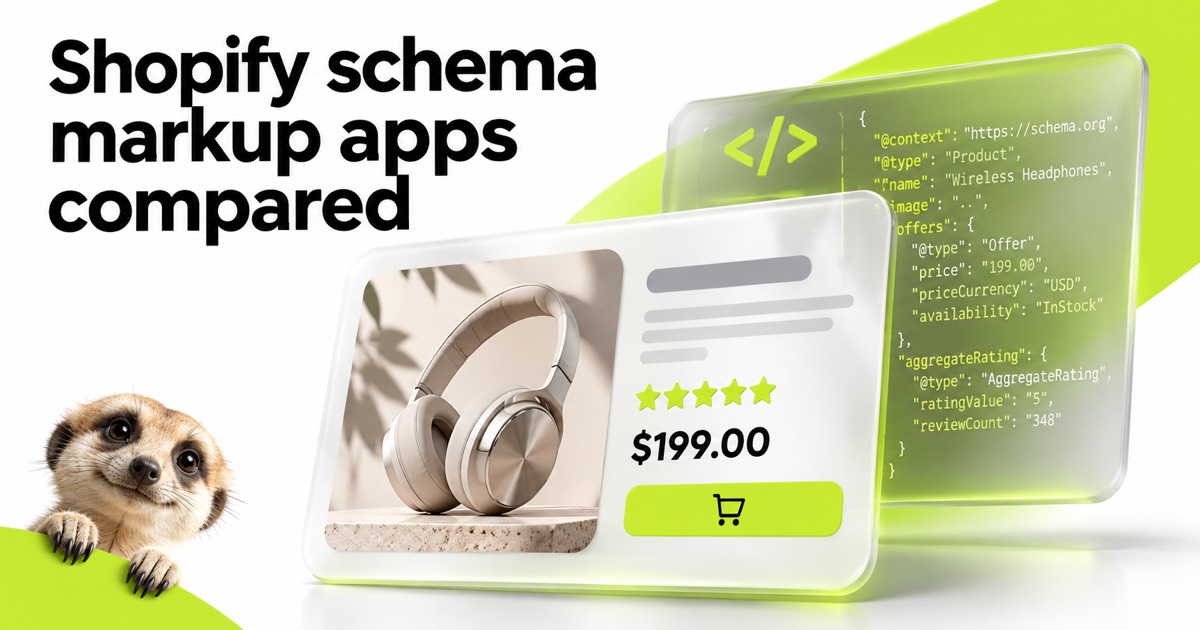
Short answer: before installing anything, test what your theme already outputs — many Shopify themes ship Product JSON-LD, and adding an app on top is the #1 cause of duplicate, conflicting markup. Install a schema app when your theme's markup is incomplete (missing price, availability, brand, reviews) or when you need types the theme doesn't cover (FAQ, Organization, breadcrumbs).
In this article
Why schema matters more in the AI era
Structured data is the one part of your page written for machines. When ChatGPT, Perplexity or Google quote a product — name, price, availability — valid Product/Offer markup is the most reliable way those facts travel. Markup that's missing, invalid or contradictory means the AI either guesses or skips you.
Step 0: test before you install
- Paste a product URL into Google's Rich Results Test.
- Run a NIMSEO check — it validates Product/Offer/Organization markup on real pages as AI bots receive them (markup injected by JavaScript after load is often invisible to them).
- Count the Product blocks. One is correct. Two is a problem to fix before anything else.
The options compared
| Option | What it covers | Watch out for |
|---|---|---|
| Your theme's built-in markup | Usually Product + Offer on product pages | Often incomplete (no brand, no reviews); varies by theme |
| Yoast SEO for Shopify | Product, Organization, breadcrumbs, articles | Overlap with theme markup — disable one source |
| Smart SEO | JSON-LD generation + meta automation | Same duplication risk; check after theme updates |
| Schema-focused apps (Schema Plus & similar) | Broad type coverage, support for edge cases | Paid; still needs validation after setup |
| Hand-coded in theme (developer) | Exactly what you need, nothing else | Needs a developer and re-checks after theme updates |
We don't rank these 1-to-5: the right choice depends on what your theme already outputs. An audit first, then the smallest tool that fills the gap.
The rules that keep markup working
- One source of truth. Theme or app — never both emitting Product. If you install an app, disable the theme's block (most themes and apps document how).
- Server-side beats client-side. Markup injected by JavaScript after page load is invisible to most AI crawlers even when Google sees it. If your markup only appears with JS on, treat it as missing for AI.
- Completeness counts.
price,priceCurrency,availability,name,imageare the minimum for a quotable offer.brand,sku/gtinstrengthen identity. - Honest reviews only. Mark up
AggregateRatingonly for genuine customer reviews collected through a real mechanism. Marking up self-written praise risks manual actions and poisons AI trust signals. - Re-validate after every theme update. Markup breaks silently.
FAQ
Does Google still use Product schema? I heard FAQ rich results were removed.
FAQ rich results were retired from most search listings, but Product markup remains central — it powers shopping experiences and gives AI systems structured facts. Markup's value shifted from "pretty snippet" to "machine-readable truth".
My Rich Results Test passes. Am I covered for AI?
Partly. The test fetches like Google (with rendering). Many AI crawlers don't render JavaScript — so also verify markup exists in the raw HTML. That's precisely what NIMSEO checks.
Can I write JSON-LD by hand in my theme?
Yes, and for a focused catalog it's often the cleanest option: full control, no app fees, no duplication. Budget a re-check after each theme update.
Do schema apps slow my store down?
JSON-LD itself is lightweight text. The app's other features (scripts, widgets) may add weight — evaluate the whole app, not the markup.
Which types should a store have besides Product?
Organization (site-wide identity: name, logo, social profiles) and BreadcrumbList. FAQ markup on product pages can still help AI systems extract answers even without rich-result display.
Find out what your product pages actually expose: free NIMSEO check — validates markup as AI bots see it.